Iridium Messaging Transport
IMT enables customer terminals using Iridium Certus modules to send and receive data over the Iridium® network utilising industry standard terrestrial IoT/data transactions methods, dramatically simplifying the design, development, integration, message management and transaction flow.
IMT is the natural successor to Iridium's SBD service, and allows faster throughput and significantly larger messages (up to 100kB).
Depending on your usage, IMT is likely to represent a cost-saving over SBD.
Ground Control has worked closely with Iridium since the very beginning of Certus IMT and are experts in this technology.
For IMT message transfer and configuration, use the shared RockBLOCK Pro AT command reference. Physical wiring, default port settings and USB virtual serial access are covered in the RockBLOCK Pro Serial Interface guide.
Iridium Certus 9704
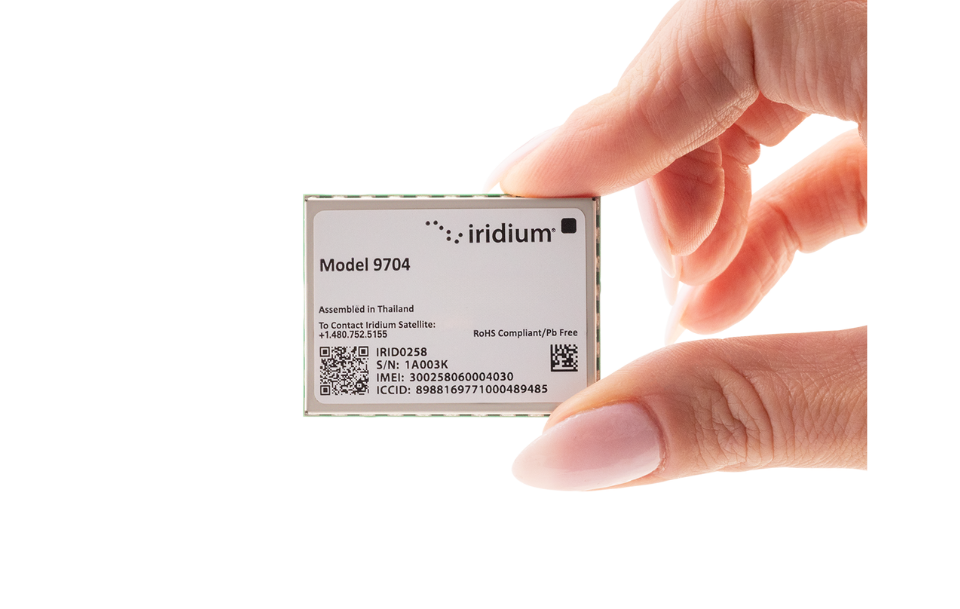
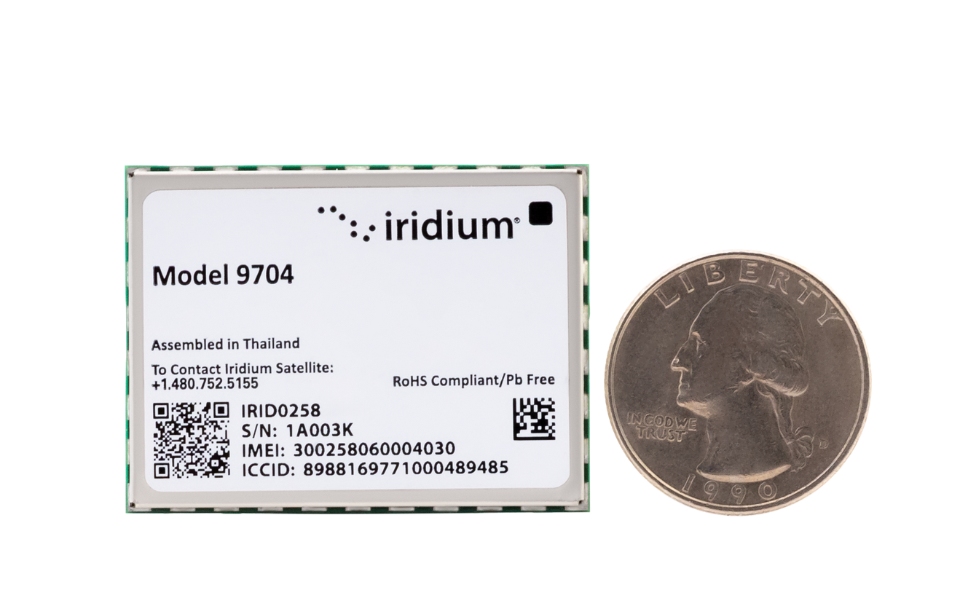
Built into an ultra-slim module, Iridium Certus™ 9704 integrates with products of any scale to deliver cloud-ready data over Iridium’s truly global satellite network. Iridium Certus 9704 exclusively supports IMT, a cloud-native, server-device messaging format that optimises Iridium network capabilities to match increasing demand in industrial IoT.
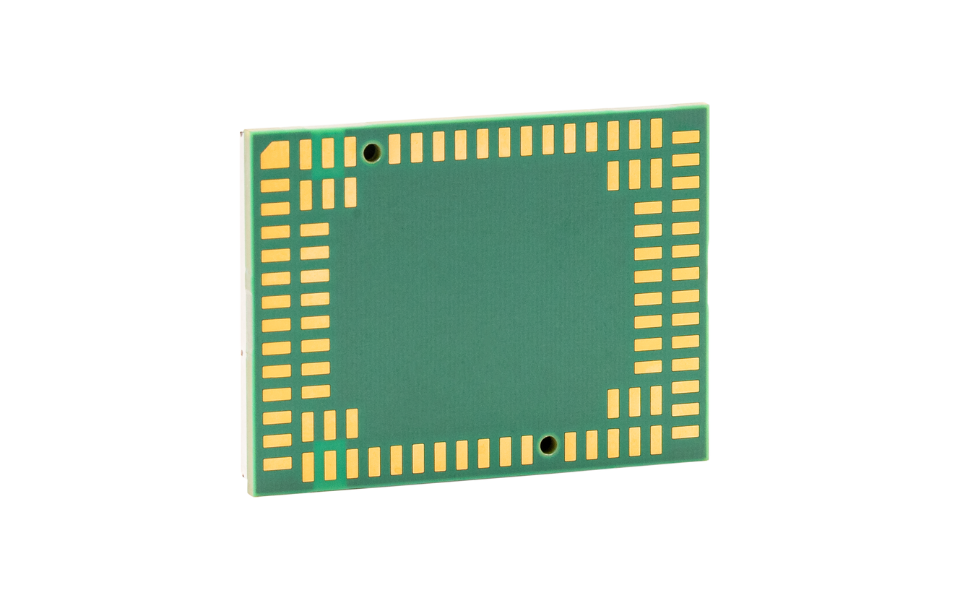
Iridium Certus 9704 harnesses the power of truly global satellite coverage in a sleek form factor without cables or added parts—just a single component soldered directly onto the Printed Circuit Board (PCB). A durable surface mount coupled with minimal profile height allows developers to build compact, rugged, and versatile devices.
Resources
RockBLOCK Pro comes fully certified when used with the recommended antenna and cable
If you're looking to integrate the bare 9704 modem Ground Control can help you navigate this process.
Latency and cold starts
Latency is defined as the time taken for a transmission to be sent from the Iridium transceiver to the end destination.
- IMT messages: on Ground Control airtime, the end destination is Cloudloop. From there, messages can be API pulled or pushed/forwarded to your own systems.
- IP data: Latency for IP data is measured per packet between the transceiver and the IP destination.
End-to-end latency of an Iridium transmission, whether an IMT message or IP data, consists of three stages:
- Session ramp-up: approximately 5 seconds to establish a session with the satellite network.
- Transmission: the time taken to send the data, which increases with the amount of data.
- Gateway to cloud: the time taken for the data to travel from the Iridium gateway to its destination.
Approximately 5 seconds is the average session ramp-up time quoted by Iridium. In practice it depends heavily on signal strength and the antenna's view of the sky. Ground Control regularly observes ramp-up times of 5 to 12 seconds, and occasionally longer.
Session ramp-up applies only to the first transmission in a session. Further transmissions while the session is active are sent without this delay.
If no data is transmitted for approximately 15 seconds or longer, the satellite link closes. The next transmission then requires a new session (a cold start) and incurs the full session ramp-up time.
On Iridium Certus 9770 products, an active IP data session also reduces IMT delivery time. Where ring alerts are used, MT delivery takes approximately 2 seconds longer.