Iridium Certus 100 Network
Utilising Iridiums robust and resilient LEO satellite constellation the Iridium Certus 100 Midband service has been specifically optimised for applications with real constraints around size, weight and power.
The RockREMOTE solution is certified to operate on the Certus 100 IoT service, providing support for fixed or mobile IoT applications with IP data speeds of upto 88Kbps.
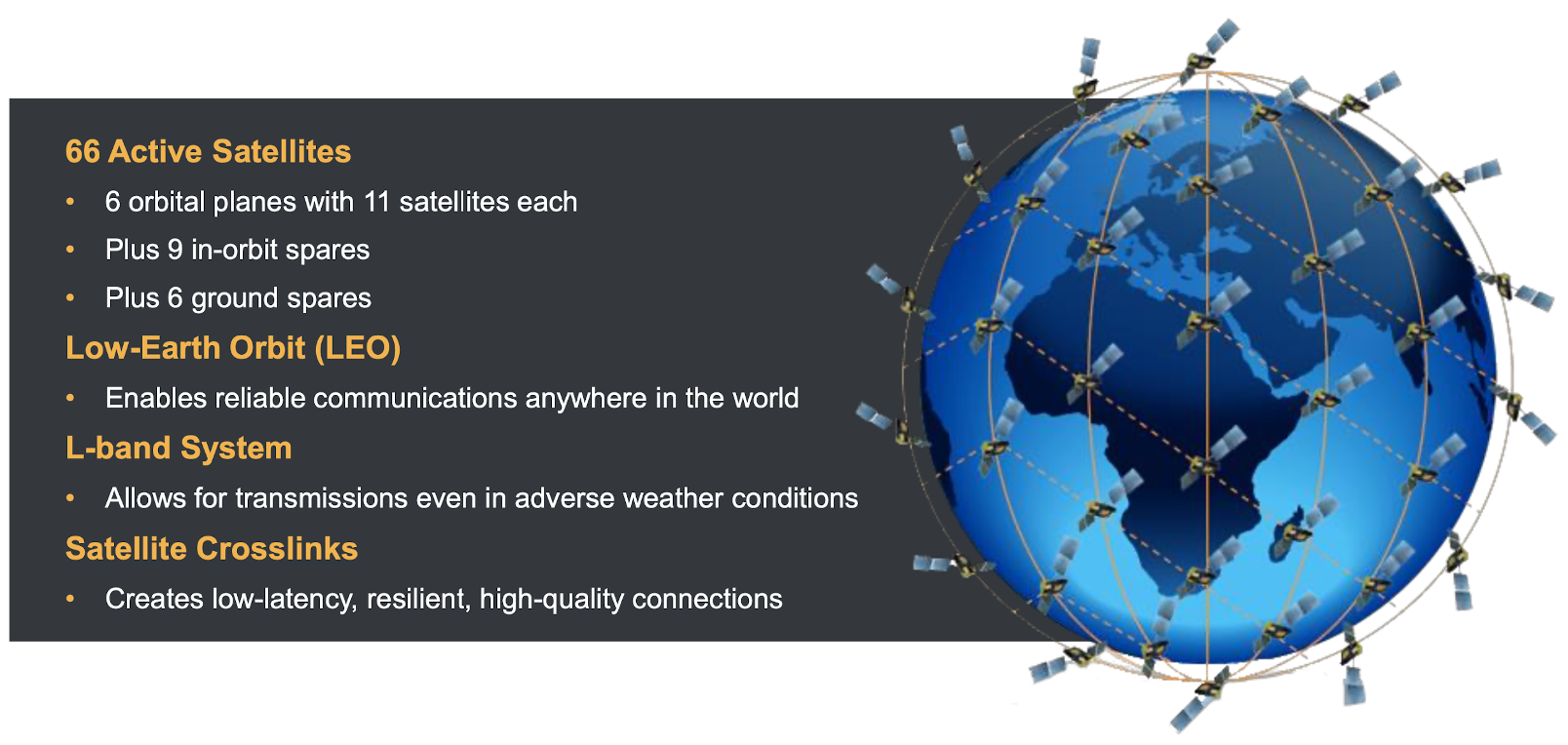
Key Network Features
Truly Global Coverage
Pole-to-pole coverage using the Iridium satellite network constellation
Weather Resilient
Operating over the L-Band provides resilience to adverse weather conditions
Low Latency
LEO constellation provides shorter transmission path from the ground to the satellite resulting in faster connections
Reliable
Cross linked satellites with overlapping spot beams provides extremely reliable global communications
Midband Network Speeds
IP data speeds
- 22Kbps Transmit (future capable up to 88Kbps)
- 88Kbps Receive
The Iridium Certus 9704 and 9770 transceivers in RockBLOCK and RockREMOTE products are configured in firmware to transmit only when signal strength is at least 1 bar. Do not duplicate this check in your application. Do not delay, block or skip a transmission based on a signal reading; send the data and the transceiver will transmit it when conditions allow.
Signal readings remain useful for diagnostics, installation checks and monitoring.
Latency and cold starts
Latency is defined as the time taken for a transmission to be sent from the Iridium transceiver to the end destination.
- IMT messages: on Ground Control airtime, the end destination is Cloudloop. From there, messages can be API pulled or pushed/forwarded to your own systems.
- IP data: Latency for IP data is measured per packet between the transceiver and the IP destination.
End-to-end latency of an Iridium transmission, whether an IMT message or IP data, consists of three stages:
- Session ramp-up: approximately 5 seconds to establish a session with the satellite network.
- Transmission: the time taken to send the data, which increases with the amount of data.
- Gateway to cloud: the time taken for the data to travel from the Iridium gateway to its destination.
Approximately 5 seconds is the average session ramp-up time quoted by Iridium. In practice it depends heavily on signal strength and the antenna's view of the sky. Ground Control regularly observes ramp-up times of 5 to 12 seconds, and occasionally longer.
Session ramp-up applies only to the first transmission in a session. Further transmissions while the session is active are sent without this delay.
If no data is transmitted for approximately 15 seconds or longer, the satellite link closes. The next transmission then requires a new session (a cold start) and incurs the full session ramp-up time.
On Iridium Certus 9770 products, an active IP data session also reduces IMT delivery time. Where ring alerts are used, MT delivery takes approximately 2 seconds longer.
Iridium Certus 100 Airtime
As an Iridium partner, Ground Control provides access to a range of Iridium Certus airtime packages to meet the needs of your IoT application.
Contact Ground Control for more information on plans and pricing.